How We Lead in this Time of Trial

How we lead in this time of trial will be an indicator of how we transform our businesses.  If we have been blessed to be called leaders, we have a responsibility to rise up today to focus on the true meaning of our vocation…a call to focus on people.  It really does not matter what business each of us is in, our primary business is the business of taking care of our people.  It does not matter today whether or not you make cars and trucks, dish detergent, blenders, furniture or children’s toys; you manufacture these things through the work of human beings.  These human beings, through their work, service other human beings through the goods and services they provide.

After this crisis is over, we will be measured as leaders, on how we treated our employees.  Does it really matter today that our employees worked from home because their job is able to be performed from home?  Were your employees safer and providing safety to all of society because they were working from home?  Were you afraid that these work-from-home employees were taking advantage of you by not working a forty-hour week?   My default leadership philosophy has always been that I trust my employees unless they give me a reason not to trust them.  Perhaps your employee did not work a full forty hours this week.  Maybe they did not work the time because they were taking care of their child who is home from school due to this crisis.  Maybe that employee took groceries to their elderly parents who cannot get out to get their own groceries.  Your accommodation, as a leader, to your employees’ current personal demands, I assure you will be paid back ten-fold to you when life returns to normal.  This repayment to you will be due to your employees’ gratitude for how you treated them when they needed you the most.

During my thirteen years of leadership, I have had employees share their personal stories of dealing with difficult health issues including cancer and autoimmune disorders.  I have also had employees who have experienced anxiety and stress, and shared their personal stories with me.  At this moment in time, you may or may not know the physical and mental health issues that your employees are dealing with in their personal lives.  Lead with kindness and compassion.  You will never make a wrong decision by doing what’s right for each person on your team. Trust your employees.  How each of us is dealing with this current crisis, is personal.  We cannot assume how people are managing their daily lives in this time of unchartered life. Maybe your employee’s spouse is a doctor or nurse.  Maybe their adult child is now unemployed. Your employees may or may not share this with you. Default with kindness always.

Someday, we will get back to normal life.  I hope it’s not totally the normal life that we knew before this crisis.  I hope we’re each a little kinder.  I hope we’re more accommodating to our employees’ needs.  I truly believe our employees will appreciate their jobs a little more, and will give back to their employers because their employers gave to them when they needed it the most.  You see, it really is about taking care of each other.  It really is about being one human family.  Take care of each other.  None of us know where this situation is leading us, but I know we are traveling on this journey together.  May God bless all of you.

How Diversity in the Workplace Can Bring Peace to a Broken World

The opportunity to be an engineer has been a tremendous experience in my life.  Engineering fosters a unique work dynamic that, I believe, does not exist in all professions.  Much of this dynamic is fostered by the fact that mathematics and technology are universal languages.  Engineering attracts people from all over the world.  I had the opportunity to work in a company that had a large global presence.  I made friends with people from various regions across the globe.  At times these relationships were the result of my company doing business in a specific region, and at times, people who grew up in different parts of the world, became my colleagues in the United States.

A few years ago, I hosted a party in my home in which I invited colleagues to come into my home to enjoy an evening of camaraderie and food.  I did not think too much about which people to invite; I just invited some of the people I worked with.  I asked each guest to bring a dish to pass.  We had food from so many different ethnic backgrounds because I was fortunate to work with people from all over the world.  As I was enjoying the evening, I thought about the remarkable gift I was given to work in this environment.  Who would have ever thought when I was growing up in Otisville, Michigan, and my colleagues were growing up in places like India, Bangladesh and Russia, that our paths would cross, and we would not only be work colleagues, but good friends?  It was a profound realization for me of how connected humanity is all across the globe, and that I had a significant role in developing and fostering these relationships.

In a world where some people are still suppressed, abused, and suffering from horrific acts of violence, we must hold ourselves accountable to treat all people equitably to create a more civilized world.  We need to be the beacon of light for the world.  We can make a difference in our corporate worlds.  We can show peace, harmony, kindness and friendship regardless of race, nationality, creed, gender, age or sexual orientation.  We can do so by ensuring that the faces of our corporate organizations are diverse.  We cannot just say we understand diversity; we need to act on building diverse corporate organizations.  We need to understand through relationships and true experiences with diverse people in order to foster a culture of equity and fairness.  Corporate hierarchies that are diverse can show hope to children across the world.  Children can see that they can rise up from difficult circumstances, and can achieve a way of life better than the generation before them.

Diversity is so important for many different reasons.  In the corporate environment, diversity brings differing opinions and different approaches to issues which ultimately leads to superior decision making.  How can a company produce products that meet or exceed the needs of a diverse customer base if their internal personnel demographic is not reflective of that diverse customer profile?  The companies that will win in competitive environments are those companies that have an in depth understanding of who their customers are, and what their customers want.

We can only find hope if we seek understanding.  I believe we can only understand people and cultures by building personal relationships. Experiencing a world of work where our colleagues are diverse will humble us to know that people all over the world want many of the same things we do.  They want health and happiness for their children.  They want freedom.  They want peace.  We can foster these behaviors in our relationships with people from all over the world in our workplaces.  We can build organizations that embrace diversity, so that companies behave within their internal cultures the way the world should behave.

I am incredibly blessed to know people from China, Russia, India, Germany, Italy, Australia, Bangladesh, Sri Lanka, Vietnam, Korea, France, Brazil, Canada, Mexico, Burkina Faso, Egypt, Lebanon, Iran, Iraq, Syria, Pakistan, Nepal and many other places.  Most of these people I met through the company I worked for.  I not only am fortunate to know them, but I am blessed to call them friends.  I hope, when they think of me, they think of friendship and peace, and that I am a positive example of diversity.  I hope that in my small corner of the world, I made it a more peaceful place because of the global relationships I have fostered. 

These same people I worked with have offered prayers and good thoughts to me when I was struggling through personal health issues during different periods of my life.  I have had people praying for me who were Muslim, Hindu, Buddhist, Jewish and Christian.  I had atheists and agnostics sending me positive thoughts and messages.  I embraced them all because they all came from wonderful people, I call friends.

Together we can build a better world one relationship at a time.  We cannot expect governments to do this critical work alone.  We are part of the solution.  We must stand up for what is right.  We must call out inequities.  Fairness and respect need to be at the core of who we are.  Reaching out to that neighbor, who may appear to be different than we are in many ways, will cause us to realize, he or she is more like us than what we ever imagined.  This diversity initiative must occur in the corporate world.  We go to work every day.  We interact with people globally every day.  We are building relationships every day.  We can make ourselves better every day.  We choose our path in this life.  Which path are you going to choose today?

Copyright 2019 Beyond the General LLC.

Jeanette Kurnik is CEO of Beyond the General LLC.  She has 34 years of automotive controls engineering experience and is an advocate for women in engineering.

It’s Not Negative Feedback, and By the Way, It’s Important

Feedback…we like to talk about it a lot, but how well are we providing it?  It’s wonderful to be able to provide feedback to employees when they do something well or achieve something great.  Positive, praising feedback makes the employee feel good and the manager feel good.  Having the ability to reinforce that positive feedback with a reward system also provides good endorphins.

Where many leaders fall down is in providing feedback that can help an employee improve their performance or behavior.  It can be an uncomfortable situation because it requires an employee to focus on areas that are not fully developed in himself or herself.  Many times, an employee may even have a blind spot and not recognize that there’s something he or she needs to develop.  

One day, at work, I was walking with a colleague and she told me she needed to provide some “negative feedback” to one of her employees.  The comment stopped me in my tracks.  As we discussed the situation further, I realized that what she really meant was that she needed to provide constructive feedback to an employee to help the person grow and develop.  This is very different from “negative feedback.”  The employee had some negative behaviors to correct, and the feedback required was positive for that employee’s growth and development.  It wasn’t apparent to me in the conversation that the employee even realized that her behavior was not where it should be to meet her leader’s expectations.  The leader owed this employee the constructive feedback.  In this leader’s follow-up discussion with the employee, the focus needed to be that both the employee and leader knew that there could be a successful outcome in making the necessary improvements.

I regularly ask for feedback on how I can improve my performance and behavior.  Often, the response from my leaders has been, “keep doing what you’re doing.”  Albeit, that is some kind of feedback, it’s not sufficient feedback to enhance growth and improvement for an employee and/or a product.  This statement implies that I’m doing a perfect job, but as all of us know, there is always room for growth.

As leaders, we owe employees this constructive feedback.  Everyone has opportunities to improve.  Any feedback needs to be given with dignity and respect for the employee. Often, that employee may not even realize areas where they may have shortcomings.  These constructive conversations can lead to training and coaching opportunities that an employee may not have sought out without the conversations.

Building a company culture of employee development, coaching, mentoring and regular feedback can foster a healthy environment where constructive feedback is embraced and not feared.  Constructive feedback should be the norm in one-on-one conversations with employees. Improvement should be a way of life for every employee in a business.  Knowing what to improve upon is a necessity to achieve better employee performance and product results.  Without this culture, the only expected outcome is the status quo.

What Down Syndrome has taught me about Leadership


I was going to create a list of the top ten things that Down Syndrome has taught me about leadership. When I started to create the list, I realized that the final item on the list I had created summarized it all: 

When you help someone who you think is lesser than you, you’ll more than likely find they are greater than you.

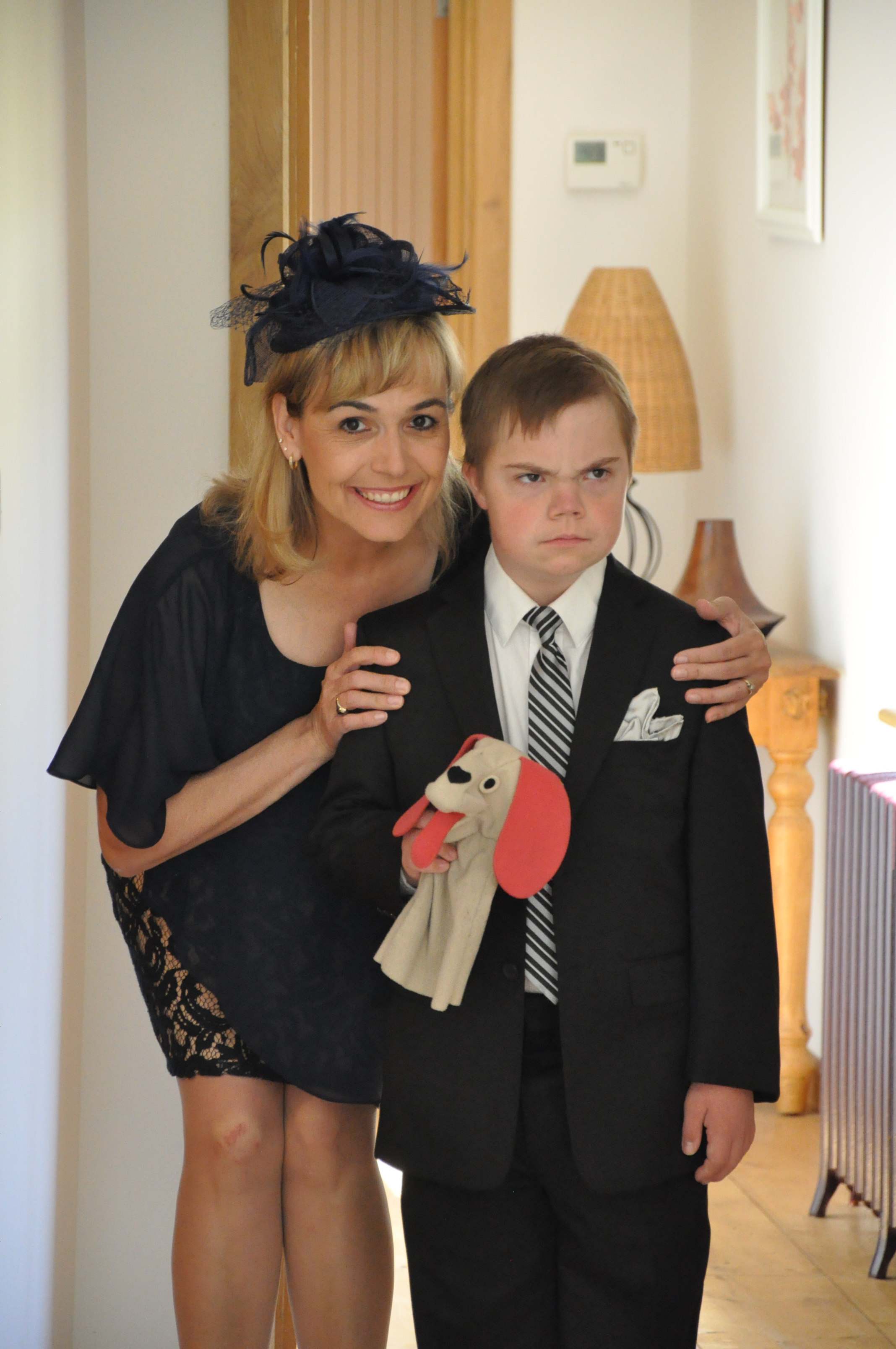
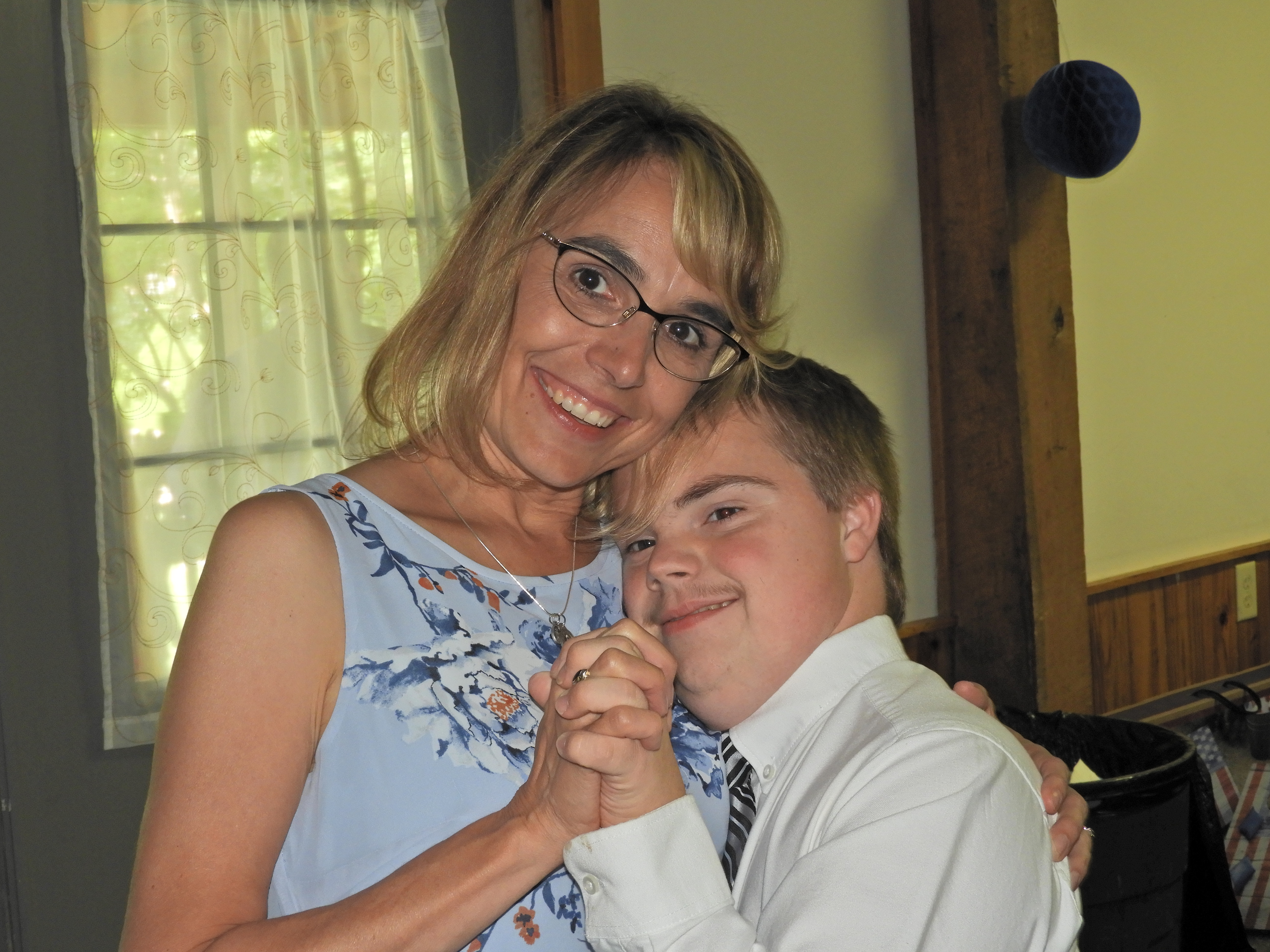
In 2002, at around 20 weeks into my 4thpregnancy, I was told that my baby had either Down Syndrome or hydrocephalus.  I had an amniocentesis to confirm that my son had Down Syndrome.  I cried for four months.  I was worried about my son.  I didn’t think I was capable to raise a child with a disability.  My father’s cousin, who had an adult son with Down Syndrome, told me, “God picked you.”  At the time I told God, “Pick somebody else, I can’t do this.”

Now that I know this little boy, who is now 16, I’m so glad God picked me.  God knew exactly what he was doing.  Why did I even question Him?  He did pick me, and He gave me such a tremendous gift.  

This experience of raising a child with Down Syndrome not only impacted my personal life, but it also enhanced my work life. I have discovered as a leader that I have been called to service.  Service has always been difficult for me because like many people, I tend to focus on myself.  I love to talk, and I’ve struggled to listen.  To let others rely on me has been difficult.  I know that my son was sent to me to teach me the gift of service.

When I learn to shut up and listen and focus on others, I find that in those moments I have been able to really help people.  All of the other things that I’ve learned from Down Syndrome culminate into the lesson of service to others. This service to others has made me realize that my own growth can only happen by lifting others up.  So, in helping my son, he has helped me.  I realize that every day I need to be more like him.  He holds the key to life, to leadership, to basic human kindness.  Every day that I was going into work to lead a group of people, my son was honing me to be a better leader.  He did this through these key behaviors:

  1. My son has great talents.  His love for people is beyond anything I’ve ever experienced in this world.  He hugs strangers in the grocery store.  At times it frightens me, and then I think, who am I to stop it?  He’s safe with my vigilant watch over him, and I have to tell myself, that the person he just hugged probably needed that hug today.  
    • As a leader, every person that I have ever managed had talent.  Sometimes it was misplaced, but that was part of my role in helping that person find where their talent was best utilized.  It wasn’t always an easy role.  Sometimes it took lots of discussion and listening to help that employee discover where their passion should take them.
  2. My son is so kind.  He treats everyone the same.  He truly loves everyone.  If someone is mean to him today, he’s forgotten it tomorrow.   
    • There is no room for anything but kindness.  Kindness builds stronger teams.  It allows people to grow and develop because they are not afraid to ask questions, and to show their vulnerabilities.  It allows everyone on the team to lift up everyone else.
  3. Thinking differently opens new opportunities.  My son has an artistic ability.  No one ever told him he couldn’t draw.  He just draws freely.  
    • Creativity at work happens when we allow employees to be their creative selves. If we let everyone release their talent without micromanaging them, we allow innovation to happen.  We should encourage thinking differently, and as leaders we need to enable people, not constrain them.
  4. Down Syndrome allows my son to see the world in a humorous fashion.  He doesn’t see the world problems.  He just sees that we should laugh at ourselves.  
    • We often take ourselves too seriously.  I saw that at work we often took the work so seriously, that we forgot to laugh.  In laughing, and enjoying each other’s company, we build relationships that forge a better work life.  These relationships build efficiencies in getting excellent work accomplished.
  5. Life is precious.  Every life is precious.  My son’s life is precious and has great purpose.  I can’t imagine my life without him.  Our community would be less joyful without him.
    • Those people you work with have a family.  They also have their struggles just like you do.  I often think we are so consumed by our own struggles that we aren’t listening to those around us and their struggles.  I found many leaders that were so into their career and their movement upward that they forgot the people who worked for them. The employees were the people who were creating the product that was making the company money.  Focusing on people and making the employees the number one concern, will always produce a better product.  There were people I worked with who were considered great success stories.  They had the perfect diplomas from the most prestigious schools.  They were in powerful positions in a great company, and yet, if I were their mother, I’d be ashamed of the way they treated people. I often felt sorry for these leaders because they missed out on the greatest part of leadership, the employees.

Never forget the human side of work. Employees have shared with me some extremely difficult situations in their personal lives.  I’ve had employees tell me they had cancer, a newly diagnosed auto-immune disease,  children who were giving them great challenges, and many other tough situations.  In these moments of pure humanness in leadership, it made me recognize we’re all in this life together.  We are all connected, and sometimes people just need a hug, and it’s sometimes okay to do even at work.  

The greatest leadership lessons of my life, I’ve learned from the people I was sent to serve.

Copyright 2019 Beyond the General LLC.

Jeanette Kurnik is CEO of Beyond the General LLC.  She has 34 years of automotive controls engineering experience and is an advocate for women in engineering.

Living my Grandmother’s Dream

My grandmother was a tough woman.  She was born in 1900, and she had six children, including a son who died as a baby. When my grandmother was a teenager, she wanted to attend high school.  She was a good student and wanted to continue her education.  Her father told her that it wasn’t necessary for her to continue school because all she was going to do was raise children.  She did raise children, and she did it well.  She had two sons who experienced action in World War II in the South Pacific.  One of these sons spent three months on Guadal Canal, and my grandmother had no idea where he was, or even if he was alive.  I cannot imagine the stress my grandmother had to endure from the horror of this experience. During the war, my grandfather and grandmother worked in the automotive plants in Flint, Michigan.  My grandfather worked on aircraft engines, and my grandmother was a government tank inspector at the former Fisher Body complex.  My grandmother lost my grandfather the day before their 50th wedding anniversary in 1969.  I was only three years old at the time, so I really only knew my grandmother as an independent, single woman.  She always worked, mostly as a housekeeper and cook at her local Catholic parishes.  She never had the opportunity to attend high school and college, let alone pursue a career.

I spent the past 34 years as an engineer in the automotive industry.  It wasn’t easy for a woman engineer in a male dominated industry.  I found many situations in my career frustrating. There were times I nearly quit.  During these difficult moments, though, my grandmother would come to mind.  I would have to remind myself that I was living her dream.  I was able to get the education.  I was able to pursue the career.  My grandmother was never afforded these opportunities.  I was making a difference.  It truly was a luxury that I had!  My grandmother helped to encourage me.  She cheered me on through my schooling.  Even after she passed, she was with me, encouraging me every step of the way.  She knew that I would make a difference in a way she wasn’t allowed to.  

I’m not finished with my contributions to the engineering world.  I’m still living my grandmother’s dream.  There are things that I look back on in my career thinking perhaps I should have done more for women.  I worked hard to ensure equity, and I have to remind myself that I have done what I could in the time and generation that I have lived.  I will continue to educate others to bring about equity and fairness for all.  When I think about it, I know that women of my generation and I have made a significant difference for the next generation of women.  I hope that the women entering the workforce today look back to the women of my generation with gratitude for the road we paved.  I hope they look back just like I look back to my grandmother and thank her for her mark in the world and her fight to make it a better place for me.

Copyright 2019 Beyond the General LLC.

Jeanette Kurnik is CEO of Beyond the General LLC.  She has 34 years of automotive controls engineering experience and is an advocate for women in engineering.

What new thing did you learn today?

Every day we should be motivating ourselves to learn something new.  The only way to grow is to push ourselves beyond our comfort zones and learn.  Unfortunately, I believe many of us have looked at education as solely a means to an end.  We go to college to get a job.  In our late teens and early twenties, many of us are not looking at education as a growth opportunity.  We just want to take the classes in our major and finish college.  It can be a “check the box” process for many students.

Broadening ourselves is difficult for many of us.  Woe to the engineering student who has to take an American literature class.  This student many times forces himself to just survive the class.  The same situation is true for the literature student who must take a calculus class.  Pushing our boundaries is uncomfortable.  Learning something in an area where we may have little interest or no experience can mean hard work.  

When I finished my undergraduate degree in electrical engineering, I was burned out on school. Engineering school was tough, so much so that the experience didn’t motivate me to continue on to graduate school.  I also didn’t think it was necessary to get a graduate degree because many of the engineers I worked with didn’t have a graduate degree.  At the time, I didn’t have mentors who encouraged me to continue my education. It truly was unfortunate because when I finished my undergraduate studies there were few women getting graduate degrees in Electrical Engineering.  

Pushing yourself to learn something even outside of your current role may actually help you to better understand your chosen profession. In 2007, after working for a while, I was personally motivated to learn about speech pathology. I went back to undergraduate school to learn something new.  It was an amazing experience.  It convinced me that every person should at least take an anatomy and physiology class.  At some point in time, everyone will experience a medical event in their life.  Knowing the human body, diseases and treatments, at least at a foundational level, is important in helping make decisions about healthcare for you or your loved ones. It was also enlightening that there were many corollaries between medicine and engineering. Laminar and turbulent flow not only occur in pipes, but in our vascular system. Ohm’s law (V = I x R) not only applies to electronics on a circuit board, but in our nervous system as well.

The economic crisis of 2008-2009 convinced me to go back to school again.  I went back to college to earn a Master’s degree in Information Technology.  This degree didn’t even exist when I graduated with my undergraduate degree.  It was an online program, which made it more convenient for me to incorporate into my busy life.   I loved the experience for many different reasons.  First, the degree program got me back into programming.  I learned how to program in Java and SQL.  Secondly, it pushed me to study and to formally learn again.  The most surprising and rewarding aspect I experienced by going to back to school was the opportunity to give back to younger people.  Many of the classes I took had group projects. I worked on projects with other people from my company.  On these projects, I was able to introduce younger engineers to experiences that I had in my career.  I was able to share my knowledge, and to help these engineers grow in their knowledge as well.  The experience helped me build relationships with younger people in the company, and to understand a new way of learning in an electronic age. It was one of the more rewarding experiences in my career.

As a people leader, I encouraged my employees to pursue their graduate degrees.  I know I personally influenced several engineers who I worked with to go back to get their Master’s degrees.  What a wonderful sense of pride to know that I made a difference in their lives.  I helped to secure their futures because even if a job goes away, no one can take away an education.  Leaders should be encouraging all of their employees to grow their knowledge, and to push themselves out of their comfort zones.  This education can be formal or informal.  There are so many opportunities through colleges and universities.  There are also many new learning venues online now.  Sites like Udacity, Coursera and Udemy offer a plethora of classes and even nanodegrees.  

Maybe today you can learn something new or inspire someone else to learn something new.  It may be related to your career or it may not.  Why not go back and get that degree you always wanted? Take the time to learn about that new technology that is a part of your world today. Just pick up that John Steinbeck or Ernest Hemingway novel you were inspired to read because you took that literature class in college.  Maybe you’ll be immersed in the arts to take you away from the everyday stress of your job.  Perhaps, you’ll start those piano lessons you always wanted to take to broaden your knowledge of music.  Learn sign language so that you can communicate with someone who may communicate differently. Whatever it is, push yourself and broaden your horizons through education.  You won’t regret it!

Stop Apologizing

As a leader of an engineering team, I had many people working for me who were balancing their work life with raising young children.   When I first became a leader, it quickly became apparent to me how differently employees on my team found a balance between their work and family life, particularly when something anomalous happened in the day to day activities with their children.  When the children were sick or needed to be taken to a doctor’s appointment, some of my employees typically just went and picked up their children, and they did what they needed to in order to take care of their child.  These employees may or may not have let me know.  We had a flexible work environment that allowed for that behavior.  I trusted my employees, unless they gave me a reason not to trust them.  I expected my employees to just do their job and get the work done.  For the most part, when and where they did the work really didn’t matter to me.  I measured my employees’ actual performance.  

Some of my employees, however, would come into my office when their children had a doctor’s appointment or were sick. These employees would explain to me how much time they were going to be away, exactly how they were going to make up the time, and would proceed to apologize profusely about needing to perform some of their family tasks during working hours.  I coached these employees to stop apologizing, and told them that it was perfectly okay to take the time to care for their children. It didn’t matter to me when they did their work. I was flexible.

Why do many employees feel the need to apologize?  Life happens.  Every employee needs their employer to accommodate their personal life at one time or another.   

Balancing work and home life is part of every day life.  People who bring their management into too many of the little nuances of what they’re doing with each minute of their day leave an impression that they can’t balance all of their activities, and that the employee is looking for the manager to help them solve their everyday problems.  

I had a colleague once tell me, “Never complain, never explain.”   I’d like to add to that quote, “Stop apologizing unless there’s a real reason to apologize.”  There’s no reason to apologize for taking care of yourself or your family.  It’s acceptable, and may be even required to notify your management when you need to take personal time, but don’t apologize for it. If your employer doesn’t have policies in place to allow for you to take care of yourself and your family, you’re likely with the wrong employer.  

Copyright 2019 Beyond the General LLC.

Jeanette Kurnik is CEO of Beyond the General LLC.  She has 34 years of automotive controls engineering and leadership experience and is an advocate for women in engineering.

Why are Women Critical of their Technical Capability?

I spent 34 years as an engineer in the automotive controls business.  The past 12 years of my experience was as an engineering group manager. I had the privilege of working with many technically talented people, and many of the technically talented people I worked with were women.  

I had plenty of opportunities to discuss career development with many employees.  An issue that frequently arose in my discussions only seemed to come up in my conversations with women.  The issue that surprised me was how many women engineers were critical of their technical capability.  The first time I became aware of this was when the company I was working for was going through a difficult financial time and was laying off people.  One of my colleagues, who was also a good friend of mine, asked me, “What am I going to do if I lose my job?”  I was stunned that she asked me the question.  I said, “Well, you’ll pick yourself up, dust yourself off, and find another job.”  I was stunned because this woman was a technical trailblazer in our company.  She started her career in the company when there were very few women in technical roles.  She was in a highly technical job, and she was very good at it.  She was a few years older than I was, and I always looked up to her as a role model of what an excellent, technical engineer should be.  I had such great respect for her that I tried to pattern part of my career based on her example.  She didn’t lose her job, and she continued to be a great technical leader with the company until the day she retired.  I was fortunate to work with her and learn from her great work.

The company went through another difficult time when they were doing voluntary buyouts and involuntary layoffs.  At this time, I had another colleague reach out to me who had been an expert software developer in the company when I first worked with her.  Her career advanced, and she eventually moved into a role where she was managing the execution of software builds.   It was an extremely important job in the company and a role that required someone with strong technical software skills.  This woman said to me that she was worried about losing her job, and that she no longer had the technical skills she needed to develop software again. I encouraged her, and told her that she could go back and do software development again, and that the skills she had in her current role were also valuable and marketable.

Another female employee said to me during the difficult corporate downturn, that she too was nervous about her skills because she was no longer writing code and only doing project management with business partners in Southeast Asia.  This was shocking to me.  What??  Only doing project management with an emerging market!!!  Why didn’t she think this was a marketable technical skill if she lost her job?  The company she was currently working for needed the skill.   Why didn’t she think other companies would need the same skill?

Many of these women had skills that were comparable or better than the skills their male colleagues had, and yet, for some reason they couldn’t see it.  Was it a culture that drove this thinking?  I often hear women stating that they have soft skills, and that it’s people skills that women bring to the company.   That may be true in some cases, but it’s not just soft skills that women bring.  Women bring great technical skills as well.  I know that I went to a great engineering school and worked hard to get the same engineering degree that men I worked with got.  I know I truly have comparable skills.

Leaders need to encourage women in technical roles.  Leaders and peers should stop women when they say things like they only bring soft skills to their work.  Planning women’s careers with strong technical development roles can also go a long way for any woman whether she chooses to be a technical leader or a people leader. Human Resources also has a role to ensure that diversity in higher level technical roles exists and that women are part of the development plan to fill those roles.

Can you make a difference where you’re at in your company?  Can you encourage a female colleague who may not have the confidence she should to believe she is a strong technical contributor and can take on complex, technical roles?  All of us have a role to play in encouraging women in engineering!

Copyright 2019 Beyond the General LLC.

Jeanette Kurnik is CEO of Beyond the General LLC.  She has 34 years of automotive controls engineering experience and is an advocate for women in engineering.